Falconry, the ancient art of hunting with trained birds of prey, continues to captivate enthusiasts with its blend of nature, skill, and partnership. While the path to becoming a falconer is structured, it remains accessible to those willing to commit. Most hawks can be trained to fly freely and return to their falconer in just three weeks, making early training manageable for dedicated beginners.
Your journey typically begins by finding a sponsor who can offer mentorship. You’ll also need to pass a written exam covering raptor biology, care, and hunting methods. Resources from the North American Falconry Association and local clubs provide essential guidance and community support.
Before acquiring a bird, your facilities and equipment must be inspected to ensure they meet legal standards for raptor care. Regulations differ by region, but key steps remain: find a mentor, develop necessary skills, and prepare your setup before bringing home your bird.
Understanding Falconry
Falconry is a centuries-old partnership between humans and birds of prey, combining tradition, science, and skill. Practitioners must have dedication and deep knowledge to succeed in this demanding art.
History and Traditions
Falconry dates back over 4,000 years, originating in Mesopotamia and Central Asia before spreading through the Middle East, Europe, and Asia. Records show it was practised in China as early as 700 BCE and arrived in Europe by 400 CE.
In medieval times, falconry reflected social hierarchy, gyrfalcons were reserved for kings, peregrines for earls, and merlins for ladies. This structure mirrored societal roles of the era.
Falconry terminology has shaped modern English, with phrases like “fed up,” “under one’s thumb,” and “wrapped around one’s finger” rooted in the sport.
Traditional equipment such as hoods, jesses, and gloves has changed little over the centuries, crafted with techniques handed down through generations.
The Role of Falconry in Conservation
Falconry plays a significant role in raptor conservation. Falconers developed breeding methods that helped restore species like the peregrine falcon, once endangered due to DDT exposure.
Many falconers assist in rehabilitating injured raptors, using their expertise to prepare birds for return to the wild. They also support habitat protection efforts to maintain healthy ecosystems for these birds.
Observational data collected by falconers on raptor behaviour and breeding supports scientific research and informs wildlife management decisions.
Falconry Today: Regulations and Ethics
In the UK, falconry is governed by the Wildlife and Countryside Act 1981. All raptors must be registered with DEFRA, and captive-bred birds must be ringed for identification.
Ethical falconry prioritises the welfare of the bird. This includes proper housing, regular veterinary care, and managing flying weight to maintain health.
Modern falconers balance tradition with ethical standards, avoiding practices like taking adult birds from the wild and promoting sustainable hunting methods.
Positive reinforcement has replaced outdated training methods. With proper handling, most hawks can be trained to return to the falconer within three weeks.
Qualifications and Commitments
Falconry requires legal credentials, time investment, and a long-term commitment to raptor care. These requirements ensure practitioners uphold high standards of welfare and responsibility.
Legal Requirements
In the U.S., aspiring falconers must contact their state’s wildlife department for a falconry information packet. A typical journey begins with a two-year apprenticeship under a licensed falconer.
Apprentices must pass a written exam covering raptor care and regulations, often requiring at least 80% to pass. Afterward, they progress through licensing levels, Apprentice, General, and Master, with increasing responsibilities and species access.
Housing facilities must meet strict standards for safety, size, and cleanliness, and are subject to inspection before permits are issued.
Time and Financial Considerations
Falconry demands daily care, often requiring 1–2 hours for feeding, training, and exercise. Hunting trips take additional time, and birds cannot be left unattended for long. Travel requires planning for proper bird care.
The financial investment includes:
-
Licensing: £100–300
-
Equipment: £500–1,000
-
Housing: £1,000–3,000
-
Bird acquisition: £500–5,000
Ongoing expenses include food (£500–1,000 annually), veterinary care (£200–500), and equipment upkeep.
The Falconer’s Dedication
Falconry is a lifestyle, not a hobby. The bond between falconer and bird forms through daily, consistent interaction.
Birds require care in all weather and regular hunting opportunities for mental and physical health. Many falconers describe the practice as a calling, driven by deep respect for their birds.
Success depends on patience and attention to detail. Recognising subtle behavioural shifts can make a critical difference in training and health.
Getting Started with Training
Training a raptor requires consistency, patience, and knowledge. From choosing a bird to successful hunting, each step builds the falconer-bird partnership.
Selecting a Bird of Prey
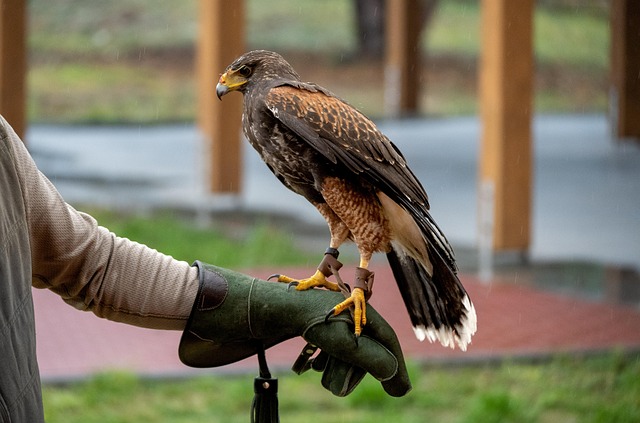
Harris hawks are ideal for beginners due to their sociable nature and trainability. Red-tailed hawks are another reliable choice, especially in North America.
Only acquire a bird after fulfilling apprenticeship requirements. Choose one with a calm, curious temperament, and ensure it’s healthy with good weight and feather condition.

Basic Falconry Equipment
Essential equipment includes:
-
A leather glove
-
Jesses for leg handling
-
A creance (long line for early flight training)
-
A digital scale for precise weight monitoring
-
Perches, hood, lure, telemetry gear, and a secure transport box
Stages of Training Your Raptor
Training typically involves:
-
Teaching the bird to step onto the glove
-
Short creance flights
-
Increasing creance distance
-
Free flights in safe spaces
-
Lure recall
-
Reliable outdoor free flight
Consistency, 20 to 30 minutes daily, is key to success.
Health and Safety Guidelines
Arrange veterinary care in advance with an avian specialist. Monitor health daily, and keep the mews clean to prevent disease. Use proper protective gear and supervise tethered birds at all times.
Daily Care and Management
Routine care ensures your bird remains healthy and responsive. Key aspects include proper housing, nutrition, and daily observation.
Housing: Mews and Weathering Yards
The mews is the bird’s indoor shelter. It should be predator-proof, ventilated, and spacious. The weathering yard allows outdoor access to sunlight and fresh air, with secure fencing.
Use appropriate perches and clean substrates like gravel. Clean both areas daily to maintain hygiene.
Feeding and Nutrition
Feed whole prey like mice, chicks, and quail once daily, typically in the late afternoon. Weigh your bird each morning before feeding, and supplement its diet during moulting as needed. Provide fresh water for drinking and bathing.
Maintaining Health and Vigor
Inspect your bird daily, especially the feet and feathers. Regular flying keeps it in shape and promotes natural behaviour. Monitor its moult and consult a vet for any health concerns.
Hunting and Fieldcraft
Successful falconry hunting requires preparation, prey knowledge, and strong bird-falconer cooperation.
Preparation for the Hunt
Ensure your bird is at flying weight. Test your telemetry gear and pack hunting essentials. Adapt to weather conditions, falcons prefer clear skies, Harris hawks may fly in light rain. Scout hunting grounds beforehand.
Understanding Quarry and Habitat
Different raptors suit different prey. Falcons hunt birds in flight; hawks and eagles go after ground animals. Learn to spot prey signs and understand how habitat and seasons influence animal behaviour.
Field Training and Techniques
Start with creance training in the field. As the bond strengthens, transition to free flight. Learn to “slip” your bird at the right moment and consider using trained dogs to help flush prey.

Community and Continuing Education
Falconry thrives through community engagement and continuous learning.
Joining Clubs and Associations
Join local or national organisations for support, resources, and mentorship. In the UK, the British Falconers’ Club offers access to events, forums, and publications. U.S. states have similar clubs.
Field meets provide hands-on learning not found in books. Membership grants access to expert knowledge and networking opportunities.
Workshops, Courses, and Apprenticeships
Structured learning enhances skills. Take online courses or attend hands-on training like those at Leeds Castle. Apprenticeships offer the most thorough route to mastery.
Short workshops let you focus on specific skills, from equipment making to advanced hunting strategies.
Raising Public Awareness
Falconers often educate the public through demonstrations and conservation efforts. Online communities help spread knowledge, promote best practices, and inspire future falconers.
Furthering Your Practice
Experienced falconers pursue deeper training and contribute to conservation and education.
Advanced Training Methods
Fine-tune weight management and explore advanced behaviours like “waiting on.” Use telemetry to track birds over large areas. Daily training builds skill and trust.
Breeding Raptors
Breeding requires expertise, permits, and custom facilities. Consult with breeders and learn husbandry before beginning. Use diet and light control to encourage breeding, and document everything for legal and research purposes.
Research and Conservation
Falconers aid conservation by logging raptor sightings, helping researchers, and joining organisations like NAFA. Public education and university partnerships also expand understanding of raptors and their ecosystems.