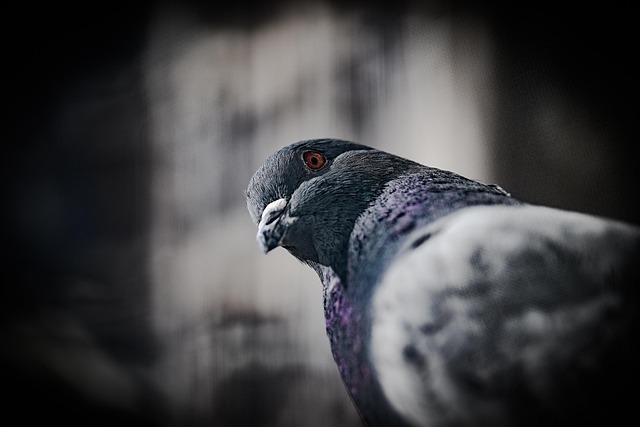
Determining a pigeon's gender can be difficult for beginners, as males and females look very similar. However, several reliable methods can help distinguish between them. The most consistent approach involves examining physical features, particularly the spacing between the pelvic bones.
The most accurate method is gently checking the pigeon's pelvic bones. Males usually have tight, touching pelvic bones, while females have a wider gap, often wide enough to fit a fingertip. This difference exists because females need extra space to lay eggs.
In addition to physical traits, behavioural patterns can also offer clues. Males tend to be more territorial and perform courtship displays, whereas females are generally calmer and less aggressive. However, these behavioural signs aren't always reliable, as individual pigeons may show traits of either gender.
Understanding Pigeon Biology
Pigeons have distinct biological features that, when carefully observed, can reveal their gender. Their anatomy and life stages provide helpful clues.
Anatomy of Pigeons
Male pigeons generally have thicker necks, fluffier chests, and larger heads. Females tend to have slimmer bodies and more streamlined features. These visual differences become clearer as pigeons mature.
The cloaca, or vent, differs subtly between genders, although this requires close examination. Experienced handlers can sometimes identify sex by observing the vent feathers’ shape and position.
Skeletal differences also exist. Males have slightly broader pelvic bones for their larger build, while females have wider pelvic spacing to accommodate eggs.
Behaviourally, males often strut with their wings slightly out and puff up their chests during courtship; a clear sign of male identity.

Pigeon Lifecycle
Pigeons reach sexual maturity around 5 to 7 months old. Before this, young birds, or squabs, are nearly indistinguishable by gender.
By 6 months, females begin producing eggs, even without fertilisation. This reproductive cycle continues throughout adulthood, with most pairs raising multiple broods annually.
During mating season, males perform elaborate displays: loud cooing, inflating their throat pouches, and dancing in circles. These are strong indicators of male gender.
Both parents help build the nest and care for the young. Males typically gather nesting materials, while females arrange them. During incubation, males often take the daytime shift, and females cover the night, offering another clue to their gender.
Observational Methods for Gender Determination
To identify a pigeon's gender, observing physical features and behaviour together provides the best results, especially when scientific tests aren't available.
Behavioural Observations
Male pigeons are known for their courtship rituals. They bow, coo, puff their chest feathers, and perform mating dances to impress females.
Males also tend to be more territorial and will aggressively defend nests during breeding season.
In pairs, males usually sit on the nest from mid-morning to late afternoon, while females cover the rest of the day and night. This consistent division can indicate gender.
Females usually respond passively to courtship, often staying still or walking away if not interested.

Physical Characteristics
Male pigeons typically have a more rounded crown, with eyes set lower on their heads. Females have flatter crowns and higher-set eyes.
Wing extension styles can also vary subtly between genders, but spotting these differences requires practice.
Males are often slightly larger and have thicker necks. However, size differences vary widely across breeds.
During breeding season, females develop wider pelvic spacing for egg-laying. This can be felt gently by trained handlers.
Feather patterns around the vent may also change during breeding season, although these differences are subtle and need close inspection.
Scientific Techniques for Accurate Identification
When behaviour and anatomy aren’t conclusive, scientific methods offer highly accurate ways to determine gender. Though they differ in cost and invasiveness, these techniques are especially useful for breeders and researchers.
DNA Sexing
DNA sexing is a modern, non-invasive method that requires only a small blood or feather sample. Blood is drawn from a wing vein, or a feather is plucked with the follicle intact.
Labs use PCR (Polymerase Chain Reaction) to analyse the DNA. Male pigeons have two Z chromosomes (ZZ), and females have one Z and one W chromosome (ZW).
This method is nearly 100% accurate and results are available in 1–3 days. DNA testing services typically cost £15–40 per bird and are widely available.
Surgical Sexing
Surgical sexing, or laparoscopy, involves making a small incision in the bird’s abdomen to view reproductive organs. A vet inserts a camera-equipped tube to locate testes or ovaries.
This method is highly accurate but carries risks like infection or complications from anaesthesia. It’s usually reserved for cases where other methods aren’t feasible. The procedure costs between £75 and £150.
Endoscopic Inspection
Endoscopy is a less invasive version of surgical sexing. A flexible camera is inserted through the vent or a small incision to view internal organs.
It requires sedation but causes less stress than traditional surgery. It provides immediate results and high accuracy, especially for young birds. However, it requires specialist equipment and costs £50–100.
Breeding and Gender Roles
During breeding season, males and females show different behaviours that help identify their gender. Both participate in nesting and rearing but perform distinct roles.
Nesting Behaviours
Males initiate breeding by choosing and defending a nest site. They perform courtship rituals such as cooing, puffing their chests, and fanning their tails.
Females often act disinterested at first but eventually accept the male if bonded. While both gather nesting materials, males usually collect, and females arrange them.
Males also spend more time defending the territory, while females focus on the nest itself.
Egg Incubation and Rearing
Both parents share incubation, with males on duty during the day and females at night. This routine helps observers identify gender through careful timing.
After hatching, both feed the chicks with crop milk. Males tend to be more defensive, while females are more attentive in feeding.
Feeding styles also differ slightly, males regurgitate more forcefully, while females feed more gently. These differences become more noticeable with experience.
Ethical Considerations in Gender Determination
Ethics are critical in pigeon gender identification. Bird welfare must always come before convenience or curiosity.
Whenever possible, use non-invasive methods like observing physical and behavioural traits. If sampling is needed, feather collection causes less stress than blood draws but should still be done by trained handlers.
Gender determination should have a legitimate purpose, such as breeding, research, or health management, not just curiosity.
Ethical best practices include:
-
Using the least invasive method
-
Handling birds gently
-
Minimising stress
-
Providing appropriate aftercare
DNA testing should be done through reputable labs that follow animal welfare guidelines. Research institutions should create and regularly update ethical protocols.
Hobbyists are encouraged to consult avian vets before attempting gender determination to ensure best practices are followed.
Advancements in Gender Identification Research
Recent advances have transformed pigeon sexing, replacing invasive methods with accurate, DNA-based tools.
One major development is using the CHD gene for gender identification. Female pigeons show two DNA bands, while males show one, making this a clear and reliable indicator.
Researchers have also created W chromosome-specific primers, enabling fast and accessible testing using RPA and LFD technologies.
These new methods offer several benefits:
-
Non-invasive samples
-
Faster and more accurate results
-
Applicable to newborns
-
Lower stress for birds
These molecular tools mark a significant improvement over older methods. The ability to sex birds at an early age is especially valuable for breeders and scientists studying avian biology.